
Imagine feeling perfectly fine, then suddenly experiencing sharp pain on one side of your lower abdomen. You might assume it's period pain or a stomach problem. But sometimes, this unexpected pain can indicate a ruptured ovarian cyst.
Ovarian cysts are common, especially during reproductive years. Most are harmless and disappear without treatment. However, when a cyst bursts, it can cause anything from mild discomfort to serious internal bleeding.
Recognising ovarian cyst rupture symptoms early can help you understand when medical attention is necessary.
What Happens When an Ovarian Cyst Ruptures?
An ovarian cyst is a fluid-filled sac that develops inside or on the surface of an ovary. When the cyst breaks open, its contents may leak into the pelvic cavity, irritating surrounding tissues and causing pain.
According to the American College of Obstetricians and Gynecologists (ACOG), functional ovarian cysts are the most common type and often disappear naturally within 6–8 weeks.
However, not every ruptured cyst is harmless. Some can cause bleeding, infection or severe abdominal pain requiring urgent treatment.
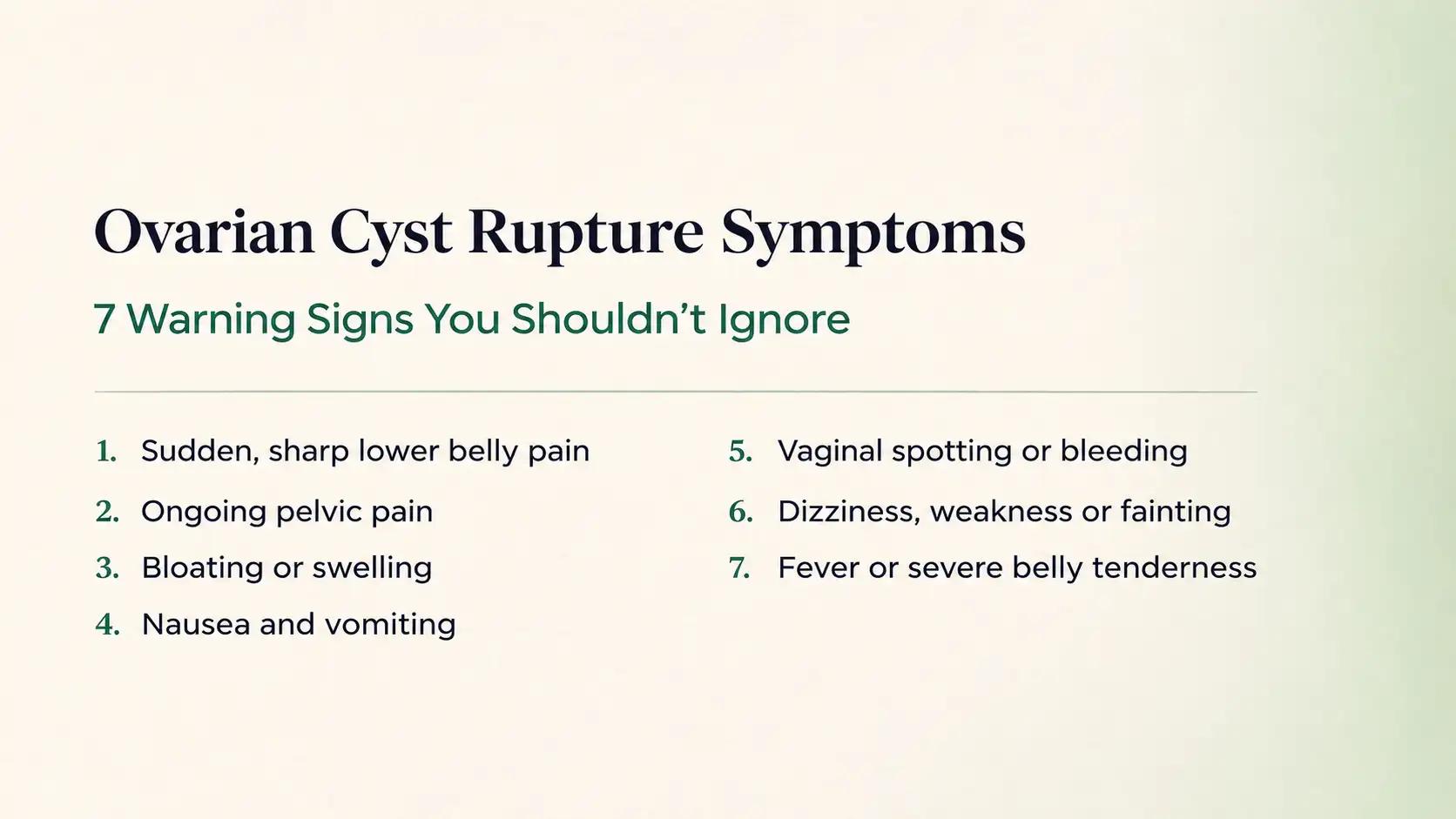
7 Common Ovarian Cyst Rupture Symptoms
Symptoms vary depending on the cyst's size, type and whether bleeding occurs.
1. Sudden, Sharp Lower Abdominal Pain
One of the most recognisable signs of ovarian cyst rupture is sudden pain in the lower abdomen.
The pain may:
- Begin unexpectedly.
- Affect one side of the pelvis.
- Feel sharp, stabbing or intense.
- Gradually it became a dull ache.
Important: Sudden, severe pelvic pain needs urgent medical evaluation, even if you have previously been diagnosed with an ovarian cyst.
2. Pelvic Pain That Continues
After a cyst ruptures, released fluid or blood may irritate surrounding pelvic tissues.
This can cause persistent discomfort, pressure or tenderness. Mild pain may improve over several days, but worsening pain requires medical attention.
3. Abdominal Bloating or Swelling
Some women experience abdominal fullness or bloating after an ovarian cyst bursts.
This may occur because fluid or blood collects in the pelvic cavity.
Significant swelling accompanied by severe pain, dizziness or weakness may indicate a complication.
4. Nausea and Vomiting
A ruptured ovarian cyst can sometimes cause nausea, particularly when abdominal pain is intense.
However, severe vomiting with sudden pelvic pain may also indicate ovarian torsion, where the ovary twists and its blood supply becomes restricted.
Ovarian torsion is a surgical emergency.
5. Vaginal Spotting or Bleeding
Light vaginal spotting may occur around the time of cyst rupture.
However, heavy vaginal bleeding should never be assumed to be a normal symptom of ovarian cyst rupture.
If pregnancy is possible, abdominal pain and bleeding may indicate an ectopic pregnancy, which requires emergency evaluation.
6. Dizziness, Weakness or Fainting
These are among the most concerning symptoms.
A ruptured cyst may occasionally cause significant internal bleeding, leading to reduced blood pressure.
Warning signs include dizziness, unusual weakness, fainting, rapid heartbeat and pale skin.
Seek emergency care immediately if these symptoms occur.
7. Fever or Severe Abdominal Tenderness
Fever accompanying pelvic pain may suggest infection or another serious abdominal condition.
A ruptured infected cyst can lead to dangerous complications, including sepsis.
Fever, worsening pain or severe tenderness should be assessed urgently.
Johns Hopkins Medicine+1
When Is Ovarian Cyst Rupture an Emergency?
Not every ruptured cyst requires surgery, but certain symptoms demand immediate attention.
| Symptoms | Recommended action |
| Mild discomfort that is improving | Contact a healthcare professional for assessment |
| Sudden, severe pelvic pain | Seek emergency medical care |
| Pain with dizziness or fainting | Emergency evaluation immediately |
| Pain with fever or repeated vomiting | Urgent hospital assessment |
| Severe pain with possible pregnancy | Emergency evaluation to exclude ectopic pregnancy |
Do not wait for a routine appointment if you experience emergency warning signs.
What Causes an Ovarian Cyst to Rupture?
Ovarian cysts can rupture naturally, particularly during the menstrual cycle.
Possible contributing factors include strenuous physical activity, sexual intercourse, bleeding into a cyst and certain underlying conditions.
However, rupture can also occur without an obvious trigger.
To understand different cyst types, read Types of Ovarian Cysts: Symptoms, Causes and Treatment Options.
How Do Doctors Diagnose a Ruptured Ovarian Cyst?
Because several medical conditions cause similar symptoms, doctors may recommend:
- Pelvic ultrasound: To examine the ovaries and detect pelvic fluid.
- Pregnancy test: To rule out ectopic pregnancy.
- Blood tests: To assess blood loss and possible infection.
- Physical examination: To evaluate tenderness and vital signs.
- CT scan: When the diagnosis remains unclear or another abdominal condition is suspected.
These tests help determine whether observation, medication or emergency treatment is necessary.
Ovarian Cyst Rupture Treatment: Is Surgery Necessary?
Most uncomplicated ruptured ovarian cysts do not require surgery.
Treatment Without Surgery
For stable patients with mild symptoms, doctors may recommend pain medication, rest, monitoring and follow-up ultrasound examinations.
When Surgery May Be Required
Surgery may be necessary when a ruptured cyst causes ongoing internal bleeding, worsening symptoms or other serious complications.
In selected cases, laparoscopic surgery allows surgeons to control bleeding and treat the affected cyst through small abdominal incisions.
Explore more about Laparoscopic Ovarian Cyst Removal: Procedure, Risks and Recovery.
How Long Does Recovery Take After Ovarian Cyst Rupture?
Mild symptoms often improve within a few days, although recovery varies.
Patients requiring hospitalisation or surgery may need longer.
For example, a patient with a small uncomplicated rupture may recover with observation and pain management. Another patient experiencing significant internal bleeding may require hospital treatment.
These are illustrative situations, not individual diagnoses.
For additional medical guidance, see Johns Hopkins Medicine's guide to ruptured ovarian cyst management.
Consult Dr. Arpit Bansal for Ovarian Cyst Treatment
Persistent pelvic pain, recurring ovarian cysts or abnormal ultrasound findings deserve proper medical evaluation.
Dr. Arpit Bansal is an advanced laparoscopic surgeon in Prayagraj who provides assessment and surgical treatment for ovarian cyst conditions.
If your symptoms are stable and you need specialist guidance, you can discuss your diagnosis, available treatments and whether surgery is appropriate.
Book a Consultation with Dr. Arpit Bansal
For severe or sudden symptoms, visit the nearest emergency department instead of waiting for an appointment.
