
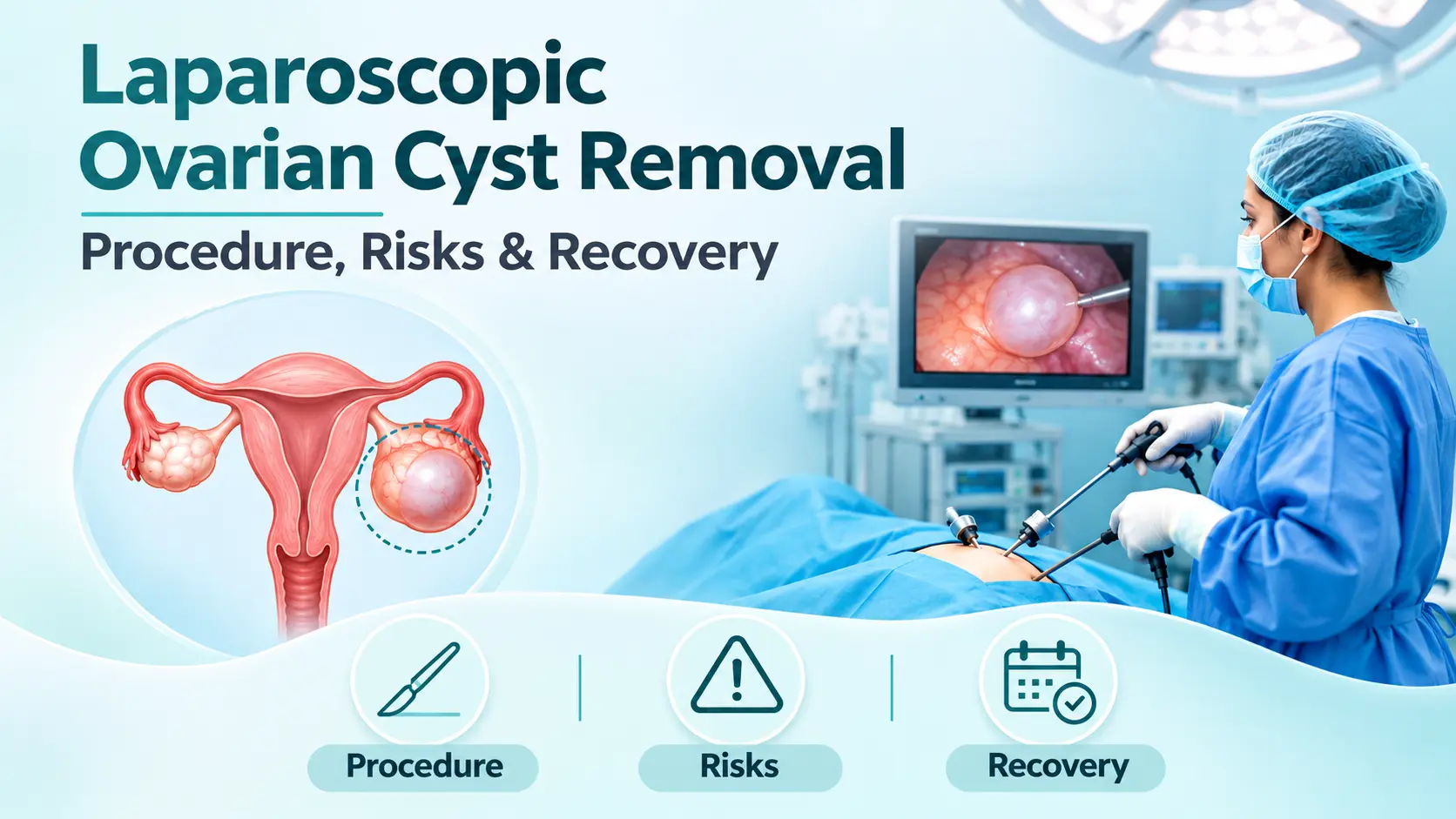
Laparoscopic ovarian cyst removal is a minimally invasive surgery used to remove cysts from the ovaries through small abdominal incisions. Also called laparoscopic ovarian cystectomy, the procedure allows surgeons to remove suitable cysts while preserving healthy ovarian tissue whenever possible.
Not every ovarian cyst needs surgery. Many disappear naturally within a few menstrual cycles. However, cysts that continue growing, cause persistent pelvic pain, or have suspicious features on ultrasound may require surgical treatment.
According to the American College of Obstetricians and Gynecologists (ACOG), minimally invasive surgery is generally recommended when an ovarian cyst is believed to be benign and surgery is necessary.
If you have been diagnosed with an ovarian cyst, understanding the procedure, cost, recovery time, and possible complications can help you make an informed treatment decision.
What Is Laparoscopic Ovarian Cyst Removal Surgery?
Laparoscopic ovarian cyst removal surgery involves removing a fluid-filled or solid-containing cyst from one or both ovaries using a thin camera and specialized surgical instruments.
Unlike traditional open surgery, laparoscopy requires only a few small incisions. The surgeon views the pelvic organs on a monitor and carefully separates the cyst from surrounding ovarian tissue.
The procedure may be considered for several types of ovarian cysts, including dermoid cysts, persistent benign cysts, and selected endometriomas associated with endometriosis.
One important distinction is that ovarian cystectomy removes the cyst, whereas oophorectomy removes the ovary. The choice depends on the cyst's characteristics, ovarian health, and the patient's fertility goals.
When Is Ovarian Cyst Removal Necessary?
Finding an ovarian cyst on an ultrasound does not automatically mean surgery is required.
Doctors usually consider the cyst's size, appearance, symptoms, growth pattern, and the patient's age before recommending treatment.
Surgery may be advised when:
- The cyst causes ongoing pelvic pain, pressure, or discomfort.
- Follow-up scans show that the cyst is persistent or increasing in size.
- Imaging suggests a dermoid cyst or another growth unlikely to disappear naturally.
- The cyst has features that require further investigation for possible cancer.
- The cyst causes complications such as ovarian torsion or significant bleeding.
For example, a woman with a small, simple cyst and no symptoms may only need follow-up ultrasound scans. Another woman with a persistent cyst causing repeated pelvic pain may benefit from surgical evaluation.
Sudden severe pelvic pain, especially with vomiting or faintness, requires emergency medical assessment rather than a routine appointment.
Laparoscopic Ovarian Cyst Removal Procedure: Step by Step
The laparoscopic ovarian cyst removal procedure is performed under general anaesthesia, so the patient remains asleep during surgery.
Step 1: Preoperative assessment
The surgeon reviews ultrasound findings, medical history, medications, and fertility plans. Blood tests, pregnancy testing, or additional imaging may be recommended.
Step 2: Small abdominal incisions
A small incision is made near the navel to introduce the laparoscope. Additional small incisions allow surgical instruments to enter.
Step 3: Examining the ovary
Carbon dioxide gas creates working space inside the abdomen. The camera helps the surgeon examine the cyst and surrounding pelvic structures.
Step 4: Removing the cyst
The surgeon carefully separates the cyst from the ovary, aiming to preserve healthy tissue where feasible. The cyst may be placed in a retrieval bag for removal.
Step 5: Closing the incisions
Bleeding is controlled, instruments are removed, and the incisions are closed. The removed tissue is usually sent for histopathological examination.
Laparoscopic Ovarian Cyst Removal Surgery Time
The laparoscopic ovarian cyst removal surgery time is often approximately 45–90 minutes, although complex cases may take longer.
Large cysts, endometriosis, adhesions, or surgery involving both ovaries can increase operating time. Anaesthesia preparation and postoperative monitoring add to the total time spent in hospital.
Many patients return home the same day or after an overnight stay, depending on their recovery and the complexity of surgery.
Laparoscopic Ovarian Cyst Removal Cost in India
The laparoscopic ovarian cyst removal cost in India commonly falls around ₹50,000–₹1,50,000 in private hospitals, although complex procedures and premium facilities may charge more.
Apollo Hospitals publishes an indicative range of ₹50,000–₹1,50,000 for laparoscopic ovarian cystectomy. This is a general estimate, not a fixed treatment price.
Procedure, Cost, Risks and Recovery+1
The final laparoscopic ovarian cyst removal cost depends on several factors:
- Hospital location, facilities, and room category
- Size, type, and complexity of the ovarian cyst
- Surgeon and anaesthesia charges
- Diagnostic investigations and histopathology
- Length of hospital stay and additional procedures
Before scheduling surgery, request a written estimate explaining what the package includes, whether insurance is accepted, and which expenses may be billed separately.
Laparoscopic Ovarian Cyst Removal Surgery Recovery Time
The laparoscopic ovarian cyst removal surgery recovery time varies according to the procedure, overall health, and individual healing.
Many patients can manage light daily activities within one to two weeks. Full recovery, particularly after complex surgery, may take longer.
| Recovery period | What to expect |
| First 24–48 hours | Mild abdominal pain, tiredness, and possible shoulder discomfort |
| Days 3–7 | Gradually improving mobility and discomfort |
| Weeks 1–2 | Many patients resume light work and routine activities |
| Weeks 2–4 | Gradual return to more activities with medical approval |
| Following weeks | Continued internal healing and follow-up when required |
These are general estimates, not guaranteed milestones. The NHS notes that complete recovery after ovarian cyst surgery can sometimes take up to 12 weeks.
NHS
Tips for a Smoother Laparoscopic Ovarian Cyst Removal Recovery
Follow your prescribed medication schedule, take short walks as tolerated, keep surgical wounds clean, and avoid heavy lifting until your surgeon approves.
Attend your follow-up appointment to discuss wound healing and histopathology results.
Contact your medical team if pain increases rather than improves, or if you develop fever, heavy bleeding, or unusual discharge.
Possible Laparoscopic Ovarian Cyst Removal Complications
Although laparoscopic surgery is generally safe, every surgical procedure carries risks.
Possible laparoscopic ovarian cyst removal complications include bleeding, infection, anaesthesia-related problems, blood clots, and accidental injury to nearby organs such as the bowel, bladder, or blood vessels.
Some patients may develop adhesions or experience changes in ovarian reserve, particularly after surgery for endometriomas. Occasionally, conversion to open surgery or removal of an ovary becomes necessary.
ACOG notes that laparoscopy generally involves less postoperative pain and a faster recovery than open abdominal surgery. However, the safest surgical approach depends on individual findings.
Can You Get Pregnant After Ovarian Cyst Removal?
Pregnancy is often possible after laparoscopic ovarian cystectomy, especially when healthy ovarian tissue can be preserved.
However, fertility outcomes depend on age, existing ovarian reserve, the type of cyst, and whether conditions such as endometriosis are present.
Removing an endometrioma may sometimes reduce ovarian reserve, so the benefits of surgery must be weighed against its possible effect on fertility.
Women planning pregnancy should discuss fertility preservation, ovarian function, and treatment alternatives before surgery.
For more information, read our related guide: Can Ovarian Cysts Cause Infertility?
Laparoscopic Ovarian Cyst Removal CPT Code
The commonly used laparoscopic ovarian cyst removal CPT code is 58662.
In the United States, CPT 58662 covers laparoscopic removal or destruction of certain ovarian or pelvic lesions, including cysts.
However, CPT codes belong to the US medical billing system. Indian hospitals may use different procedure codes for insurance claims and hospital billing. Patients should confirm the applicable code with their hospital or insurance provider.
When Should You Consult a Surgeon?
If your ovarian cyst is causing repeated pain, increasing in size, or affecting daily activities, a specialist consultation can help determine whether monitoring or surgery is appropriate.
Dr. Arpit Bansal provides consultations for advanced laparoscopic surgical care. Patients seeking guidance about ovarian cyst removal can discuss their reports, symptoms, and available treatment options.
Book a consultation with Dr. Arpit Bansal to understand whether laparoscopic surgery is suitable for your condition.