
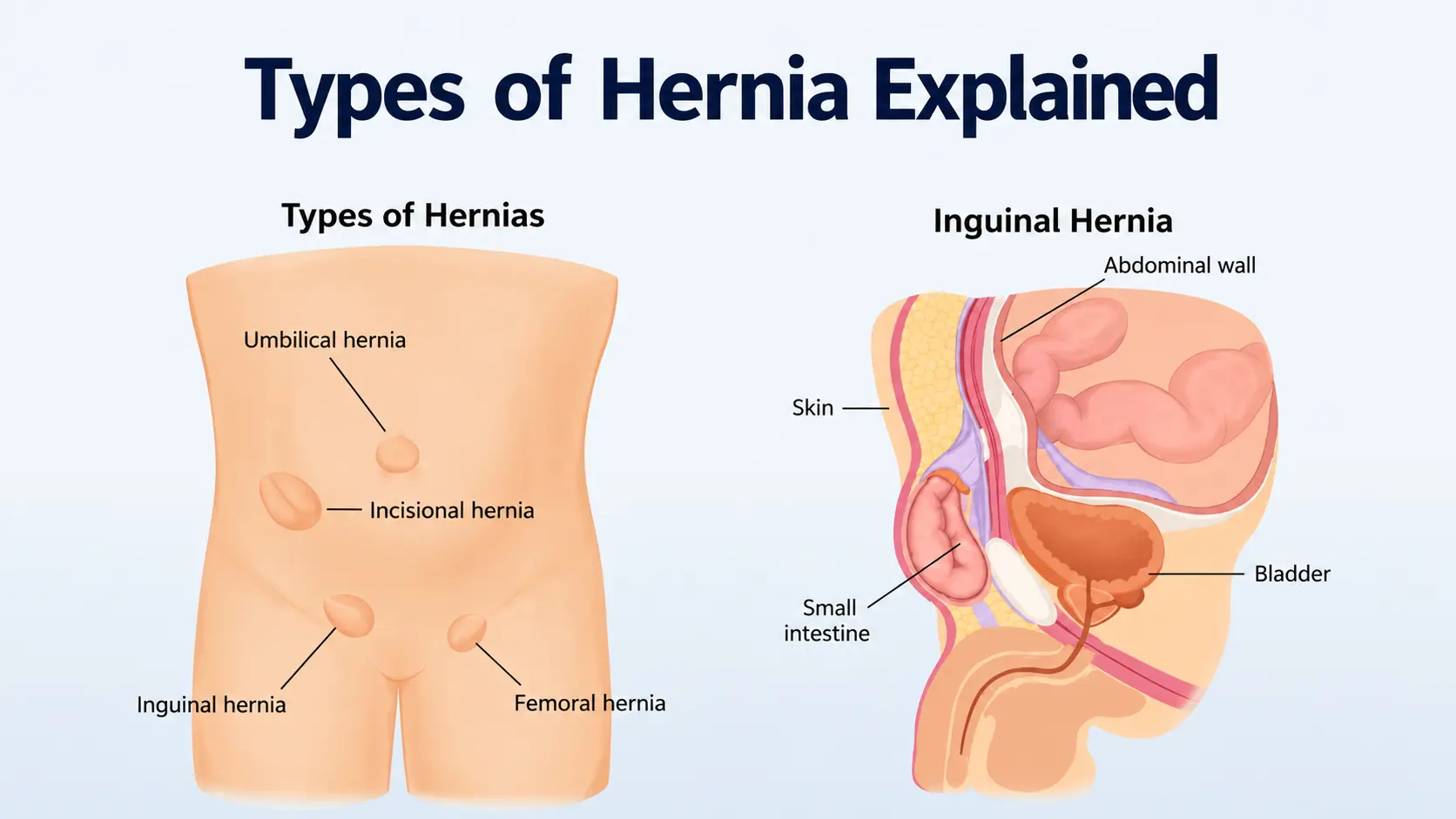
A hernia is a common medical condition that occurs when an internal organ or tissue pushes through a weak spot in the surrounding muscle or connective tissue. While hernias can develop in different parts of the body, many people are unaware that there are several types of hernias, each with its own symptoms and treatment options.
Understanding the different types of hernia can help you recognize warning signs early and seek timely medical care before complications develop.
What Is a Hernia?
A hernia develops when a weakness in the muscle wall allows an organ or fatty tissue to protrude through it. Hernias may occur due to aging, heavy lifting, obesity, chronic coughing, pregnancy, or previous surgical procedures.
Although some hernias may initially cause little discomfort, they generally do not heal on their own and often require medical treatment or surgery.
What Causes a Hernia?
A hernia develops when an organ or tissue pushes through a weak area in the surrounding muscle wall. While some people are born with weaker muscles, others develop hernias over time due to increased pressure on the abdomen.
Common Causes of Hernia
- Heavy lifting without proper support
- Chronic coughing or sneezing
- Obesity and excess body weight
- Pregnancy and childbirth
- Chronic constipation and straining during bowel movements
- Previous abdominal surgery
- Aging-related muscle weakness
- Intense physical activity
- Smoking, which weakens connective tissues
- Family history of hernia
These factors can gradually weaken the abdominal wall, making it easier for tissues or organs to protrude and form a hernia.
Who Is at Higher Risk of Developing a Hernia?
Although hernias can affect anyone, certain individuals are more likely to develop them.
Risk Factors Include:
- Men, especially for inguinal hernias
- Adults over the age of 50
- People who perform heavy physical labor
- Individuals who are overweight or obese
- Pregnant women
- Smokers
- People with chronic respiratory conditions
- Individuals with a family history of hernia
Knowing your risk factors can help you seek medical attention before complications occur.
Types of Hernia
1. Inguinal Hernia
An inguinal hernia is the most common type of hernia, accounting for the majority of hernia cases.
It occurs when part of the intestine or fatty tissue pushes through a weak area in the lower abdominal wall near the groin.
Common Symptoms:
- Bulge in the groin area
- Pain or discomfort while lifting, coughing, or bending
- Feeling of heaviness in the lower abdomen
- Swelling around the groin
Inguinal hernias are more common in men and typically require surgical repair to prevent complications.
2. Femoral Hernia
A femoral hernia develops when tissue pushes through the femoral canal, located just below the groin.
Although less common than inguinal hernias, femoral hernias occur more frequently in women, particularly after pregnancy.
Common Symptoms:
- Small lump near the upper thigh or groin
- Groin discomfort
- Pain that worsens during physical activity
Because femoral hernias have a higher risk of becoming trapped, early medical evaluation is important.
3. Umbilical Hernia
An umbilical hernia occurs near the belly button when part of the intestine protrudes through the abdominal wall.
This type is commonly seen in infants but can also develop in adults due to obesity, multiple pregnancies, or increased abdominal pressure.
Common Symptoms:
- Soft swelling around the navel
- Visible bulge that becomes more noticeable when coughing or straining
- Mild discomfort around the belly button
Adults with umbilical hernias often require surgical treatment to avoid enlargement over time.
4. Incisional Hernia
An incisional hernia develops at the site of a previous abdominal surgery.
The surgical incision may weaken the abdominal wall, allowing tissue to push through the scar area.
Common Symptoms:
- Bulge near a previous surgical scar
- Pain while standing or lifting objects
- Swelling around the incision site
Individuals who have undergone abdominal surgery should monitor any unusual swelling and consult a hernia specialist if symptoms appear.
5. Hiatal Hernia
A hiatal hernia occurs when part of the stomach moves upward through the diaphragm into the chest cavity.
Unlike other hernias, a hiatal hernia may not produce a visible external bulge.
Common Symptoms:
- Acid reflux
- Heartburn
- Difficulty swallowing
- Chest discomfort
- Frequent burping
Many hiatal hernias can be managed with lifestyle changes and medications, although severe cases may require surgery.
6. Epigastric Hernia
An epigastric hernia develops in the upper abdomen between the breastbone and the belly button.
These hernias are usually small but can cause discomfort when pressure is applied to the abdomen.
Common Symptoms:
- Small lump in the upper abdomen
- Pain during physical activity
- Tenderness around the bulge
Surgical repair is often recommended for symptomatic cases.
How Is Hernia Diagnosed?
An experienced hernia specialist can usually diagnose a hernia through a physical examination. During the examination, the doctor may ask you to stand, cough, or strain to make the hernia more visible.
In some cases, additional tests may be recommended, including:
- Ultrasound
- CT Scan
- MRI Scan
- Endoscopy (for certain hiatal hernias)
Early diagnosis helps prevent complications and allows for timely treatment.
When Should You See a Hernia Specialist?
You should consult a hernia specialist if you notice:
- A visible bulge in the abdomen or groin
- Persistent pain or discomfort
- Swelling that increases over time
- Difficulty performing daily activities
- Symptoms of nausea, vomiting, or severe pain
Ignoring a hernia can lead to serious complications, including strangulation, where the blood supply to the affected tissue becomes blocked.
Can Hernia Be Prevented?
While not all hernias can be prevented, certain lifestyle changes may reduce your risk.
Tips To Prevent Hernia
- Maintain a healthy body weight
- Avoid lifting heavy objects improperly
- Eat a high-fiber diet to prevent constipation
- Treat chronic coughs promptly
- Exercise regularly to strengthen abdominal muscles
- Quit smoking
- Avoid excessive straining during bowel movements
These preventive measures can help reduce abdominal pressure and lower the risk of developing a hernia.
When Is Hernia Surgery Necessary?
Many people wonder whether surgery is always required for a hernia.
In most cases, hernias do not heal on their own. Surgery is often recommended when:
- The hernia is increasing in size
- Pain or discomfort is affecting daily life
- There is a risk of strangulation
- The hernia becomes trapped (incarcerated)
- Complications develop
Today, advanced laparoscopic hernia surgery allows patients to recover faster with less pain and smaller scars compared to traditional open surgery.
Advanced Treatment Options for Hernia
Today, most hernias can be treated using advanced laparoscopic hernia surgery. This minimally invasive approach offers several benefits:
- Smaller incisions
- Less post-operative pain
- Faster recovery
- Reduced hospital stay
- Lower risk of recurrence
Early diagnosis and treatment often result in better outcomes and a quicker return to normal life.
Conclusion
Hernias can occur in different parts of the body, and each type presents unique symptoms and risks. Recognizing the signs of an inguinal, femoral, umbilical, incisional, hiatal, or epigastric hernia can help you seek treatment before complications arise.
If you are experiencing a persistent bulge, abdominal discomfort, or groin pain, consult an experienced hernia specialist. Timely evaluation and advanced laparoscopic treatment can help you recover safely and prevent future complications.
Dr. Arpit Bansal specializes in advanced laparoscopic hernia surgery and minimally invasive procedures, helping patients achieve faster recovery and long-term relief. Schedule a consultation today for expert evaluation and personalized treatment plan.