
Have you noticed a small lump in your belly or groin area? At first, it might not bother you much. Maybe you see it when you cough, lift something heavy, or bend down.
Most people think it'll just go away on its own, but here's the truth,it won't. Hernias don't disappear by themselves, and if you ignore them, they can cause real problems down the line.
But don't worry. The good news is that hernia surgery today is really safe and works incredibly well. And with newer, less invasive methods, you can recover quickly and get back to your normal life.
What Is a Hernia?
A hernia occurs when an internal organ or tissue pushes through a weak spot in the muscle or surrounding tissue wall, creating a visible bulge. It may cause pain or discomfort, especially during physical activity, coughing, or bending.
Common types include inguinal hernia (groin area, more common in men), umbilical hernia (near the belly button), hiatal hernia (upper stomach area), incisional hernia (after previous surgery), and femoral hernia (below the groin).
Why You Shouldn't Ignore It
A hernia typically doesn't shrink on its own. Without treatment, it often becomes larger, causing increased pain and limiting your activities. In rare but serious cases, the herniated tissue can become trapped and lose its blood supply, a condition called strangulation, which is a medical emergency. Additionally, ignoring a hernia can impact your quality of life and make future surgery more complex.
Types of Hernia Surgery
Your surgeon will recommend an approach based on the hernia's type, size, and severity.
Open Hernia Surgery (Traditional Approach)
The surgeon makes a larger incision near the hernia site and repairs the weak area. A surgical mesh is often placed to reinforce the repair. Recovery takes 4-6 weeks, with a hospital stay of 1-2 days. It's suitable for large or complex hernias but results in a larger scar and longer recovery time.
Laparoscopic (Minimally Invasive) Surgery
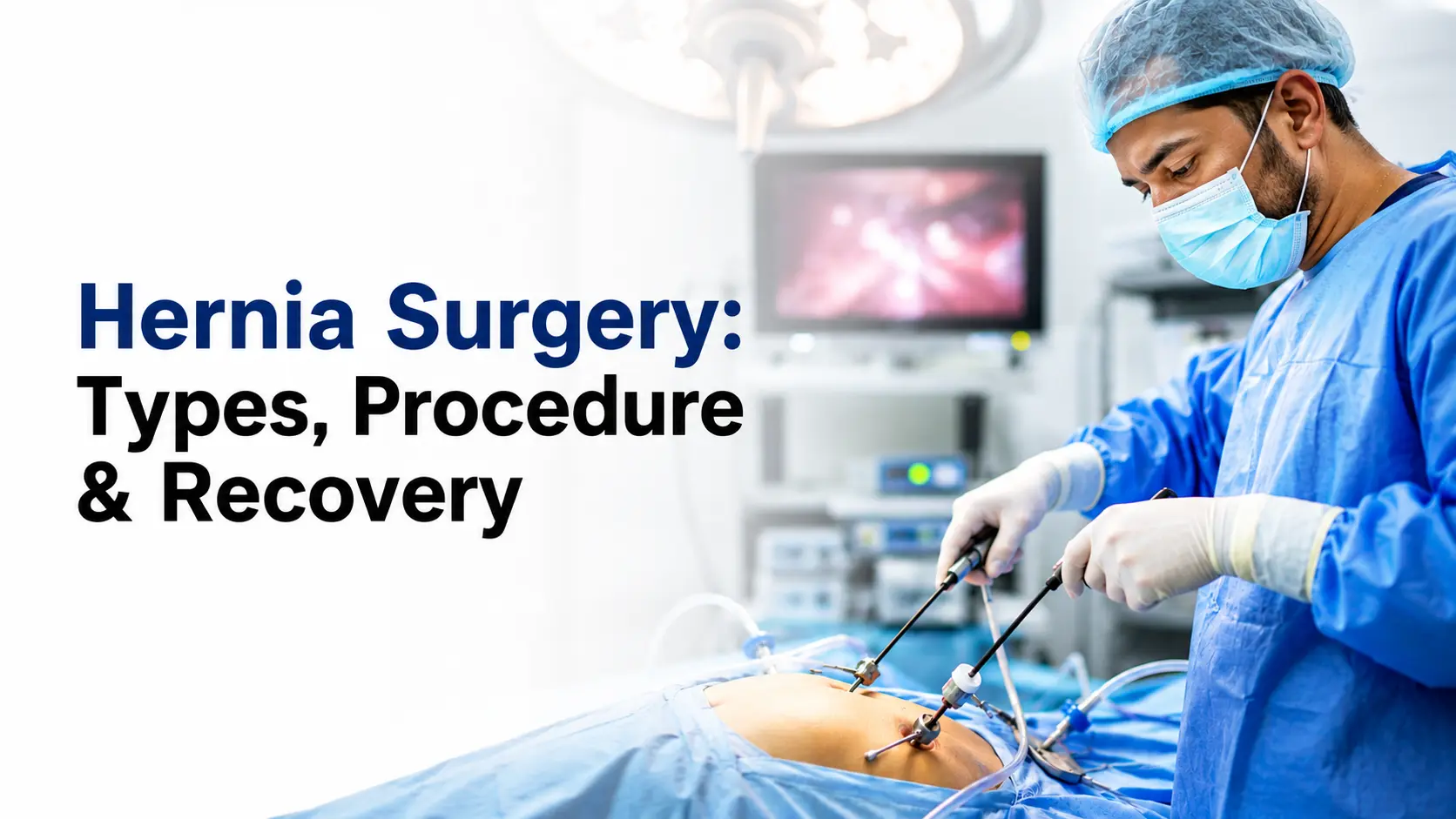
The surgeon makes 2-3 small incisions and inserts a tiny camera to repair the hernia. This method offers minimal scarring, less pain, faster recovery (2-3 weeks), and shorter hospital stay.
Most patients can return to normal activities within 2-3 weeks. It's the preferred choice for most patients, though it requires specialized equipment and expertise.
Mesh vs Non-Mesh Hernia Repair: How Is the Choice Made?
Hernia repair can be performed using mesh or a non-mesh technique. The right option depends on the type of hernia, its size and location, previous surgeries, the condition of the surrounding tissue and the patient’s overall health.
Mesh Hernia Repair
In mesh repair, the surgeon places a surgical mesh over or behind the weakened area of the abdominal wall. The mesh provides additional support to the tissue and helps close the hernia defect without placing excessive tension on the surrounding muscles.
Mesh may be used during open or laparoscopic hernia surgery. It is commonly considered for many adult inguinal, umbilical, incisional and recurrent hernias. Research generally associates mesh repair with a lower risk of recurrence compared with several traditional non-mesh techniques. However, possible risks such as infection, discomfort or mesh-related complications should also be discussed before surgery.
Non-Mesh Hernia Repair
Non-mesh repair uses the patient’s own tissue to close and strengthen the hernia defect with sutures. It may be considered in selected cases based on the hernia type, tissue quality, infection risk, patient preference and the surgeon’s clinical judgement.
Because this technique can place more tension on the repaired tissue, it may not be suitable for every patient or every type of hernia.
How Does the Surgeon Select the Right Technique?
Before recommending mesh or non-mesh repair, Dr. Arpit Bansal may consider:
- Type, size and location of the hernia
- Whether the hernia is primary or recurrent
- Condition of the abdominal wall tissue
- Previous abdominal or hernia surgeries
- Signs of infection or contamination
- Patient’s age, health and medical history
- Expected activity level and recurrence risk
- Benefits and possible risks of each technique
No single technique is right for every patient. A clinical examination and, when required, imaging tests help the surgeon recommend a suitable hernia repair approach.
When Do You Need Surgery?
Surgery becomes necessary when the lump becomes noticeably larger, you experience consistent pain, daily activities become difficult, you feel pressure or heaviness, the hernia becomes stuck, or your quality of life is significantly affected.
If you experience severe pain, vomiting, or inability to have bowel movements, seek emergency care immediately,these may indicate strangulation.
The Surgery Procedure
Before surgery, your doctor will review your medical history and recommend diagnostic tests like blood work, ECG, or ultrasound. You'll receive pre-surgery instructions including fasting 6-8 hours before the procedure.
During surgery (typically 30 minutes to 1 hour), you'll receive general anesthesia. The surgeon makes the planned incision(s), carefully reduces the herniated tissue, repairs the weak muscle wall, and usually places surgical mesh to reinforce the area. Incisions are then closed with sutures or surgical glue.
Recovery Timeline
With laparoscopic surgery, most patients experience:
- Days 1-3: Rest and light movement; pain is mild to moderate
- Week 1: Return to desk work; pain decreases significantly
- Weeks 2-3: Most daily activities resume; light walking is fine; avoid lifting over 10 pounds
- Weeks 4-6: Most restrictions lift; gradual return to exercise
- 8+ weeks: Full recovery with no restrictions
Follow post-operative guidelines: take prescribed pain medication, use ice packs initially, wear loose clothing, stay hydrated, and walk regularly. Avoid heavy lifting, strenuous exercise, bending, twisting, and smoking.
Is Hernia Surgery Safe?
Yes, absolutely. Hernia surgery is one of the most commonly performed procedures worldwide. Success rates are 95%+ for laparoscopic repairs, with recurrence rates of only 5-10%. Serious complications occur in less than 1% of cases. With experienced surgeons and proper post-operative care, the risk of complications is minimal.
Choosing the Right Specialist
Select a surgeon with board certification, fellowship training in minimally invasive techniques, high surgical volume (100+ annually), low recurrence rates, and practice at NABH or JCI-accredited hospitals.
Dr. Arpit Bansal is a highly experienced hernia specialist with fellowship training from the UK in advanced laparoscopic and minimally invasive surgery.
He specializes in minimally invasive hernia repair and practices at a NABH-accredited multispecialty hospital in Prayagraj, using advanced laparoscopic techniques to ensure faster recovery and better patient outcomes.
Conclusion
A hernia might start as a small problem, but it's not something to ignore. Without treatment, it typically worsens over time. With modern surgical techniques, particularly minimally invasive approaches, hernia repair is safe and effective.
If you notice a bulge or experience persistent discomfort, consult a trusted hernia specialist to explore your options and develop a treatment plan tailored to your needs.
Take the first step today and reclaim your quality of life.
This blog post is for informational purposes only and should not replace professional medical advice. Always consult with a qualified surgeon for diagnosis and treatment recommendations specific to your condition.