
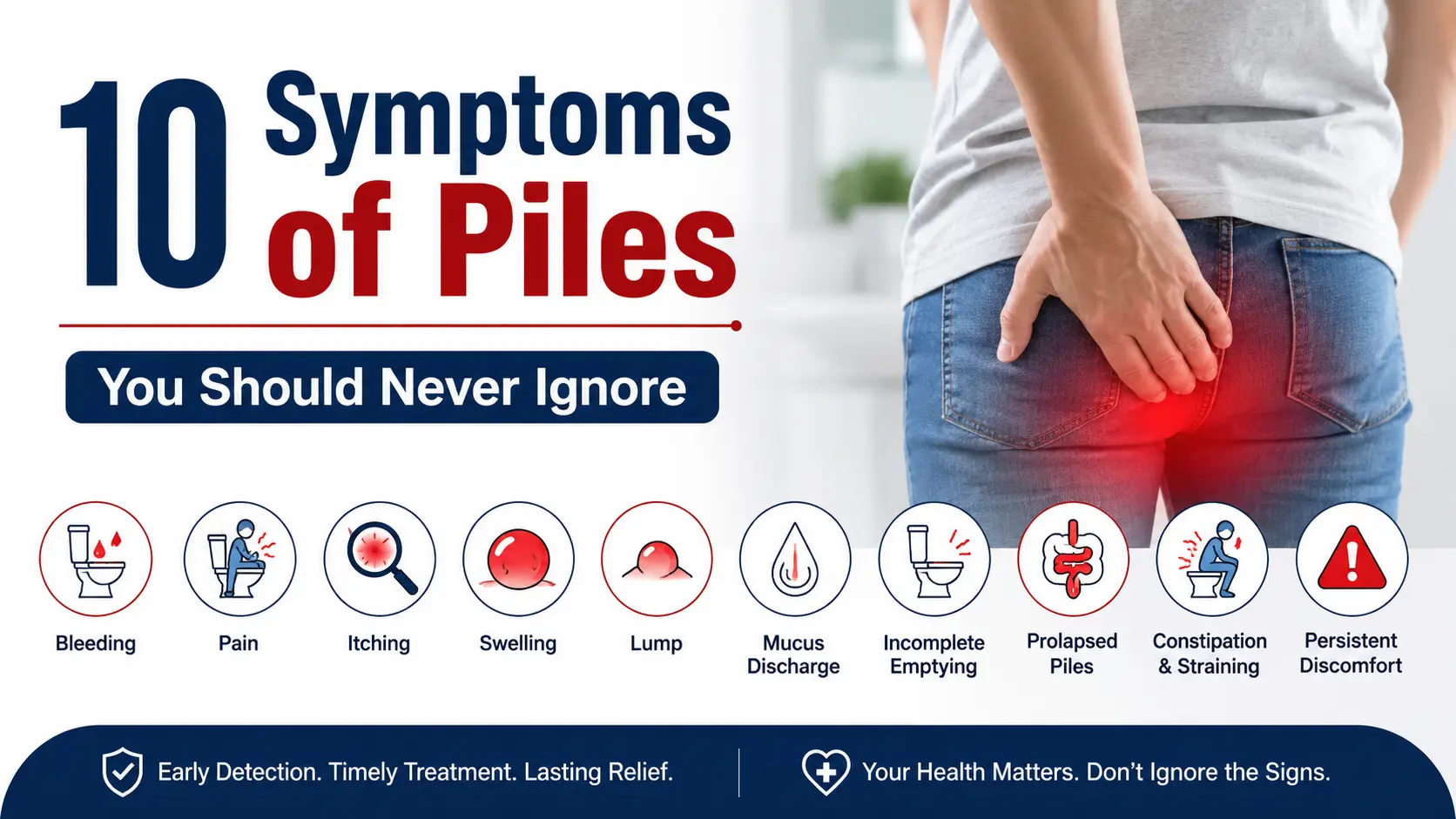
Piles, also called hemorrhoids, are swollen veins in the lower rectum or around the anus. They are one of the most common anorectal conditions, yet many people ignore the early signs because of embarrassment or the hope that the problem will go away on its own. In reality, delaying treatment can make symptoms worse and may lead to complications such as severe pain, persistent bleeding, or thrombosed hemorrhoids.
Studies estimate that around 1 in 2 adults over the age of 50 experience hemorrhoids at some point in their lives. The good news is that early diagnosis and proper treatment can prevent the condition from becoming more serious.
If you're wondering whether your symptoms are normal or something that needs medical attention, here are the 10 symptoms of piles you should never ignore.
1. Bleeding During or After Passing Stool
One of the earliest and most common symptoms of piles is bright red blood on the toilet paper, in the toilet bowl, or on the stool after a bowel movement.
Although piles often cause painless bleeding, it should never be ignored. Rectal bleeding can also be a sign of conditions such as anal fissures, inflammatory bowel disease, or even colorectal cancer. Any unexplained bleeding should be evaluated by a specialist.
2. Pain While Sitting or Passing Stool
Pain is more common in external piles or thrombosed hemorrhoids. You may notice discomfort when sitting for long periods or during bowel movements.
If the pain becomes severe or suddenly worsens, it may indicate a blood clot inside the hemorrhoid, which requires prompt medical attention.
3. Itching Around the Anus
Persistent itching around the anal area is another common symptom. This usually happens because mucus produced by internal hemorrhoids irritates the surrounding skin.
While occasional itching can have many causes, continuous irritation combined with other symptoms may indicate piles.
4. Swelling Around the Anus
You may notice swelling or a soft lump around the anal opening, especially after passing stool.
The swelling may disappear on its own in the early stages but can become permanent if piles continue to enlarge over time.
5. A Lump Near the Anal Opening
Feeling a lump near the anus is one of the clearest signs of external piles. In some cases, internal hemorrhoids can also protrude outside the anus, especially during bowel movements.
These lumps may be soft, tender, or painful depending on their severity.
6. Mucus Discharge
Some people experience a clear mucus discharge after using the toilet. This can cause irritation, itching, and discomfort around the anal area.
Although mucus discharge is common with prolapsed hemorrhoids, it should still be assessed by a colorectal specialist to rule out other conditions.
7. Feeling That the Bowel Is Not Completely Empty
Even after passing stool, you may continue to feel pressure or the sensation that your bowel has not emptied completely.
Large internal hemorrhoids can interfere with normal bowel movements and create this uncomfortable feeling.
8. Prolapsed Piles
As piles progress, internal hemorrhoids may come out of the anus during bowel movements. Initially, they go back inside on their own. Later, they may need to be pushed back manually, and in advanced stages, they remain outside permanently.
Prolapsed hemorrhoids often require medical treatment rather than home remedies.
9. Frequent Constipation or Straining
Constipation itself does not directly cause piles, but repeated straining significantly increases pressure on the veins around the rectum.
If you frequently struggle with hard stools and also notice bleeding or pain, treating constipation alone may not solve the underlying problem.
10. Persistent Discomfort That Doesn't Improve
Many people try home remedies such as warm water baths, creams, or dietary changes. While these can help mild cases, symptoms that continue for more than a week or keep returning should not be ignored.
Recurring piles may require advanced treatments such as rubber band ligation, laser treatment, or surgery depending on the stage of the disease.
Why Early Diagnosis Matters
Many patients delay visiting a doctor because they assume piles are not serious. However, symptoms such as rectal bleeding should always be properly diagnosed. A specialist can determine whether the problem is hemorrhoids or another condition requiring different treatment.
Modern piles treatment is far more comfortable than many people expect. Depending on the severity, treatment options may include:
- Lifestyle and dietary changes
- Medications
- Sitz baths
- Rubber band ligation
- Laser piles treatment
- Stapler surgery
- Conventional hemorrhoid surgery for advanced cases
Early treatment usually means faster recovery, less discomfort, and lower chances of recurrence.
When Should You See a Doctor?
Book an appointment if you notice:
- Bleeding from the rectum
- Severe pain around the anus
- A lump that becomes increasingly painful
- Persistent itching or swelling
- Symptoms lasting longer than one week
- Recurrent piles despite home treatment
Ignoring these symptoms can allow the condition to worsen and make treatment more complicated.
How To Reduce the Risk of Piles
Simple daily habits can significantly lower your risk of developing hemorrhoids:
- Eat a high-fiber diet with fruits, vegetables, and whole grains.
- Drink plenty of water throughout the day.
- Avoid sitting on the toilet for long periods.
- Do not delay bowel movements.
- Exercise regularly to improve digestion.
- Avoid excessive straining during bowel movements.
- Maintain a healthy body weight.
Conclusion
Piles are common, but they should never be ignored. Symptoms such as bleeding, pain, itching, swelling, or a lump near the anus may seem minor at first, but they can become more serious without proper treatment. Recognizing these warning signs early helps prevent complications and allows for quicker, less invasive treatment.
If you're experiencing any of these symptoms, consult an experienced piles specialist for an accurate diagnosis and the most suitable treatment plan. Early medical advice can make recovery easier and help you return to your normal routine with confidence.