
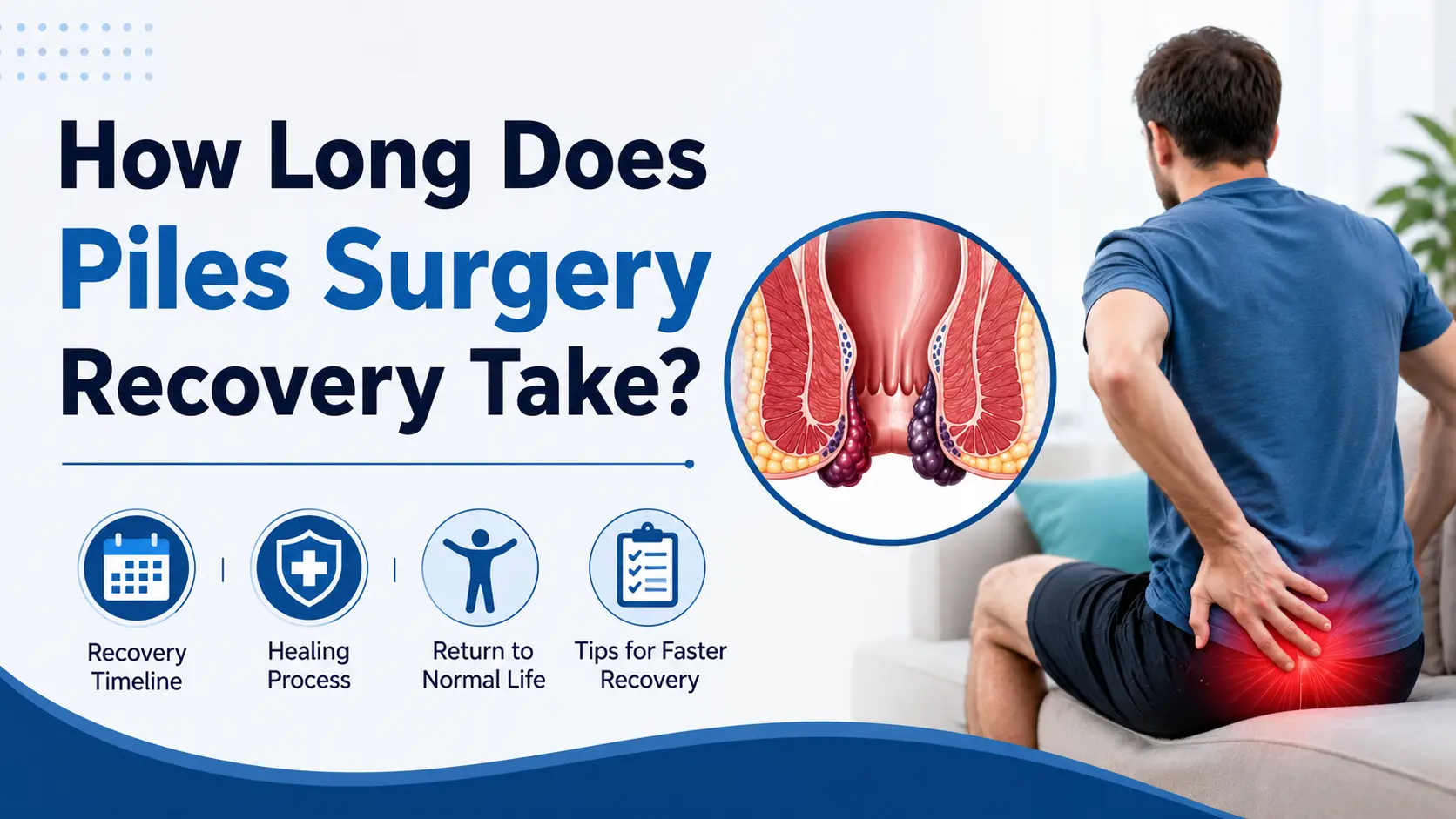
Piles, also known as hemorrhoids, affect millions of people worldwide and can cause pain, bleeding, itching, and discomfort during bowel movements. When lifestyle changes, medications, and non-surgical treatments fail to provide relief, piles surgery may be recommended. One of the most common questions patients ask is: How long does piles surgery recovery take?
The answer depends on the type of procedure, the severity of the condition, and the patient's overall health. Understanding the recovery process can help you prepare better and return to your normal routine with confidence.
Quick Answer: How Long Is Recovery After Piles Surgery?
Most patients recover from laser piles surgery or minimally invasive procedures within 3 to 7 days, while traditional hemorrhoidectomy may require 2 to 6 weeks for complete recovery.
Here is a general recovery timeline:
| Procedure | Recovery Time |
| Laser Piles Surgery | 3–7 days |
| Stapled Hemorrhoidopexy | 1–2 weeks |
| Rubber Band Ligation | 2–5 days |
| Traditional Hemorrhoidectomy | 2–6 weeks |
The faster recovery associated with laser surgery has made it one of the preferred treatment options for many patients.
Factors That Affect Piles Surgery Recovery
Recovery is not the same for everyone. Several factors influence healing time:
Type of Surgery
Laser piles surgery causes minimal tissue damage and generally leads to quicker healing. Traditional surgery involves removing hemorrhoidal tissue, resulting in a longer recovery period.
Severity of Piles
Grade 3 and Grade 4 hemorrhoids often require more extensive treatment, which can increase healing time compared to early-stage piles.
Patient's Health Condition
People with diabetes, obesity, digestive disorders, or weakened immunity may experience slower recovery.
Post-Surgery Care
Following dietary recommendations, maintaining hygiene, and taking prescribed medications can significantly improve healing speed.
Recovery Timeline After Piles Surgery
First 24 Hours
Immediately after surgery, patients may experience:
- Mild pain or discomfort
- Slight bleeding
- Swelling around the surgical area
- Difficulty sitting for long periods
Most patients are discharged on the same day, especially after laser treatment.
Days 2–7
This is the most important healing phase.
Patients usually notice:
- Reduced pain and swelling
- Improved bowel movements
- Less bleeding
- Increased mobility
Those who undergo laser piles surgery often return to desk jobs within a few days.
Week 2
By the second week:
- Most daily activities can be resumed
- Surgical wounds begin healing significantly
- Discomfort decreases considerably
- Walking and light exercise become easier
Patients who had traditional surgery may still experience mild discomfort during bowel movements.
Weeks 3–6
During this stage:
- Complete tissue healing occurs
- Pain typically resolves
- Normal physical activities can be resumed
- Risk of complications decreases substantially
Many patients report a significant improvement in quality of life compared to before surgery.
Real-Life Recovery Example
Consider a 38-year-old office professional suffering from Grade 3 hemorrhoids with frequent bleeding and pain. After undergoing laser piles surgery:
- Returned home the same day
- Resumed light activities within 48 hours
- Returned to work after 5 days
- Experienced complete symptom relief within 3 weeks
This example reflects the recovery experience of many patients who choose minimally invasive treatment options.
Tips to Recover Faster After Piles Surgery
Eat a High-Fiber Diet
Fiber helps prevent constipation and reduces strain during bowel movements.
Good options include:
- Fruits
- Vegetables
- Whole grains
- Oats
- Legumes
Stay Hydrated
Most experts recommend drinking 2–3 liters of water daily to maintain soft stools.
Avoid Heavy Lifting
Heavy physical activity can increase pressure on the surgical area and delay healing.
Follow Medication Instructions
Pain relievers, stool softeners, and prescribed medicines should be taken exactly as directed by your surgeon.
Maintain Hygiene
Keeping the anal area clean and dry helps prevent infections and promotes faster healing.
Signs You Should Contact Your Doctor
While complications are uncommon, seek medical attention if you experience:
- Excessive bleeding
- Severe pain that worsens
- Fever
- Pus or discharge
- Difficulty urinating
- Persistent swelling
Early medical intervention can prevent more serious complications.
Why Laser Piles Surgery Is Becoming Popular
Laser piles surgery has transformed hemorrhoid treatment due to several advantages:
- Minimal pain
- Smaller wounds
- Faster recovery
- Reduced bleeding
- Lower infection risk
- Short hospital stay
Many patients can return to normal activities much sooner compared to traditional surgical methods.
Conclusion
So, how long does piles surgery recovery take? For most patients, recovery ranges from a few days to several weeks depending on the procedure performed. Modern techniques such as laser piles surgery have significantly reduced recovery time, allowing patients to return to their normal routine faster and with less discomfort.
If you are experiencing persistent bleeding, pain, or prolapsing hemorrhoids, consult with Dr. Arpit Bansal a experienced piles specialist doctor can help determine the most suitable treatment option and ensure a smoother recovery journey.