
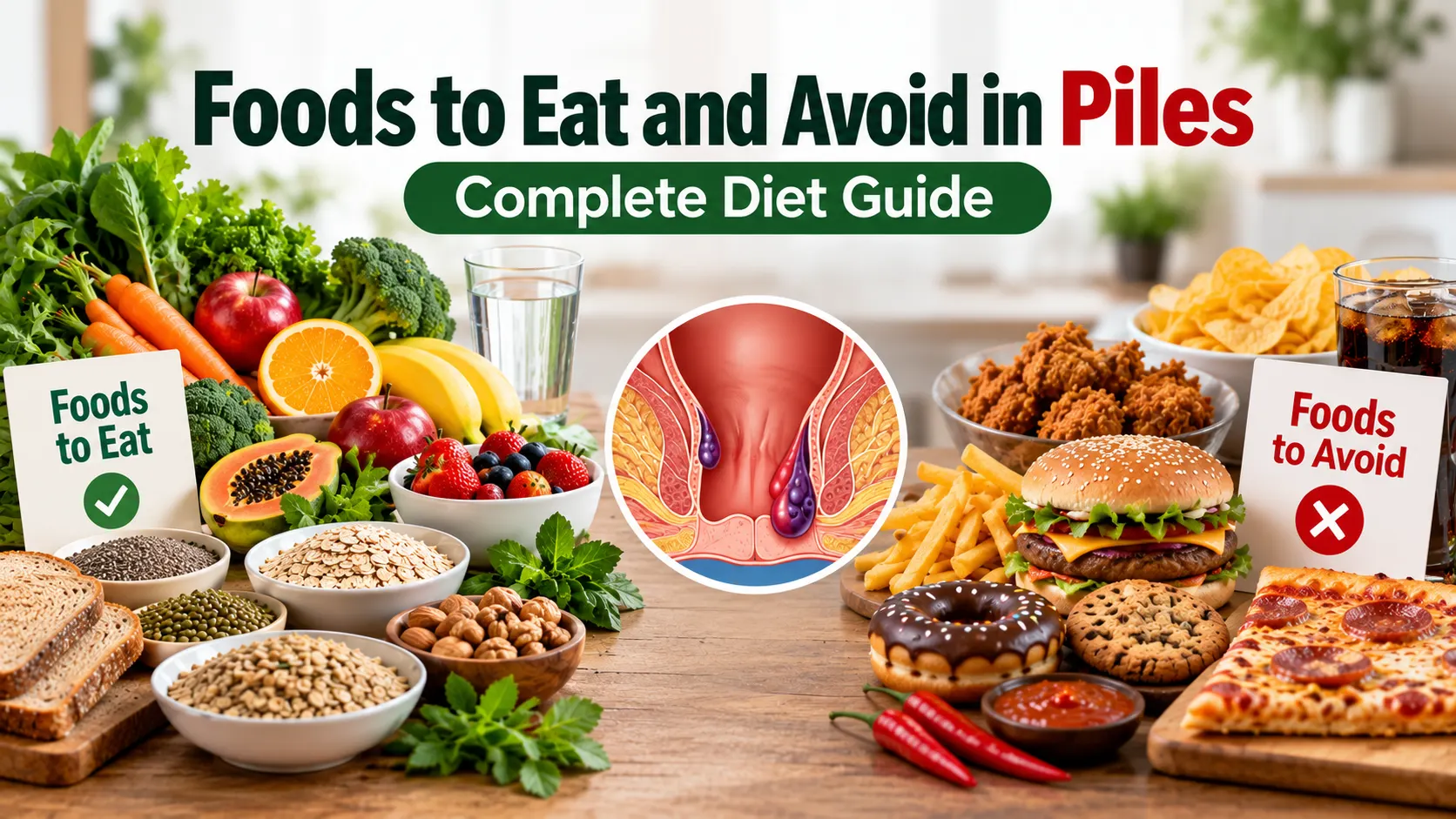
Piles, also called hemorrhoids, are swollen and inflamed veins around the anus or lower rectum. Constipation, hard stools, excessive straining, and irregular bowel movements can make piles symptoms worse. While diet alone may not eliminate hemorrhoids, eating the right foods can make stools softer, improve bowel regularity, and reduce the need to strain during bowel movements.
A piles-friendly diet is mainly focused on increasing dietary fiber, drinking enough fluids, and avoiding foods that contribute to constipation or digestive discomfort. Understanding what to eat and what to limit can make everyday bowel movements more comfortable and support overall digestive health.
Best Foods to Eat During Piles
1. Fiber-Rich Fruits
Fruits are an excellent addition to a piles-friendly diet because many provide both dietary fiber and water. Fiber helps add bulk to stool and can make it easier to pass without excessive pressure.
Good choices include apples with skin, pears, oranges, kiwi, berries, papaya, and prunes. For example, a medium pear with its skin provides around 5.5 grams of fiber, while raspberries provide about 8 grams per cup.
Instead of drinking fruit juice, choose whole fruits because whole fruits generally provide considerably more fiber. You can include fruit at breakfast, as a mid-morning snack, or alongside meals.
2. Green Vegetables and Other High-Fiber Vegetables
Vegetables should form an important part of your daily meals when you are dealing with piles and constipation. Vegetables such as broccoli, carrots, green peas, spinach, pumpkin, sweet potatoes, and beans can increase your daily fiber intake.
For example, cooked green peas provide significant dietary fiber, while sweet potatoes offer both fiber and nutrients. Adding vegetables to dal, soups, curries, or whole-grain meals is an easy way to increase fiber without making major changes to your diet.
If raw salads cause bloating or discomfort, lightly cooked vegetables may be easier to tolerate.
3. Whole Grains
Refined foods such as white bread and highly processed cereals generally contain less fiber than whole-grain alternatives. Replacing them with oatmeal, brown rice, whole-wheat roti, whole-grain bread, and bran-rich cereals can help increase your overall fiber intake.
For an Indian diet, a simple change could be choosing whole-wheat roti with dal and vegetables instead of relying heavily on refined carbohydrates. The objective is not to completely eliminate rice or roti, but to choose higher-fiber options more frequently.
4. Pulses, Beans, and Legumes
Pulses and legumes are particularly useful for people following an Indian diet because they are versatile sources of fiber.
Include foods such as moong dal, masoor dal, chana, chickpeas, rajma, peas, and other beans in your meals. Adding dal to lunch or dinner and including beans several times a week can substantially improve your overall fiber intake.
If you are not accustomed to eating a lot of fiber, increase these foods gradually. A sudden increase may cause gas or bloating.
5. Plenty of Fluids
Increasing fiber without adequate fluid intake may not provide the desired result. Fluids help support softer stools, making bowel movements easier.
Water should be your primary drink. Depending on your individual needs, activity level, climate, and medical conditions, you can also include suitable fluids such as clear soups.
Instead of waiting until you feel extremely thirsty, drink fluids consistently throughout the day.
Foods to Avoid or Limit During Piles
There is no scientifically established universal list of foods that directly causes hemorrhoids. However, certain foods are low in fiber and may contribute to constipation when they make up a large part of the diet.
Processed and Low-Fiber Foods
Try to limit foods such as chips, packaged snacks, fast food, highly processed meals, and other refined low-fiber foods. These foods may fill you up without providing enough fiber for healthy bowel movements.
For example, replacing a packaged snack with fruit, nuts, or a fiber-rich snack can improve the nutritional quality of your diet.
Excessive Refined Foods
Large amounts of refined carbohydrates, such as refined bread, pastries, and other highly processed foods, can make it harder to achieve an adequate daily fiber intake.
You do not necessarily need to eliminate these foods completely. The better approach is to make high-fiber foods the foundation of your meals and consume refined foods less frequently.
Spicy Foods
Spicy food does not automatically cause piles, and there is no need for everyone with hemorrhoids to completely stop eating chilli or spices. However, spicy meals may increase burning or discomfort for some people, particularly when hemorrhoids are already irritated.
If you notice that spicy foods consistently make your symptoms worse, reduce them temporarily and observe whether your discomfort improves.
How Much Fiber Should You Eat?
Many adults should aim for approximately 22–34 grams of fiber per day, depending on age and sex. However, your exact requirement may differ.
The most important point is to increase fiber gradually. Suddenly adding large amounts of fiber can cause bloating, abdominal discomfort, or excessive gas.
A simple daily structure could include oatmeal and fruit at breakfast, dal and vegetables with whole-wheat roti at lunch, fruit and nuts as a snack, and vegetables with dal, beans, or whole grains at dinner.
Can a Healthy Diet Cure Piles?
Diet can play an important role in managing hemorrhoid symptoms, particularly when constipation and straining are contributing factors. However, diet should not be considered a guaranteed permanent cure.
A systematic review of randomized trials found that fiber supplementation was associated with improvements in hemorrhoid symptoms and bleeding. This supports the importance of adequate fiber as part of conservative hemorrhoid management.
Diet should also be combined with healthy bowel habits. Avoid excessive straining, do not unnecessarily delay bowel movements, and avoid spending long periods sitting on the toilet.
When Should You See a Doctor?
Occasional hemorrhoid symptoms may improve with dietary and lifestyle changes. However, persistent or significant rectal bleeding should not automatically be attributed to piles.
If you experience heavy bleeding, severe or persistent pain, recurring symptoms, unexplained changes in bowel habits, or symptoms that do not improve, consult a qualified healthcare professional. Rectal bleeding can have causes other than hemorrhoids and may require proper evaluation.
Conclusion
The most effective dietary approach for piles is not about following a restrictive “piles diet.” It is about creating regular, softer bowel movements with adequate fiber and fluids. Make fruits, vegetables, whole grains, pulses, and legumes regular parts of your meals while limiting highly processed, low-fiber foods.
If symptoms continue despite dietary and lifestyle changes, professional medical evaluation is important to determine the underlying cause and appropriate treatment.